
K vs. -CK Spelling Rule + Free Printables
This post may contain affiliate links. As an Amazon affiliate, we earn from qualifying purchases.
Help your students learn the K vs -CK spelling rule for spelling /k/ at the end of a word! Plus, get 6 FREE worksheets instantly to practice reading and spelling.
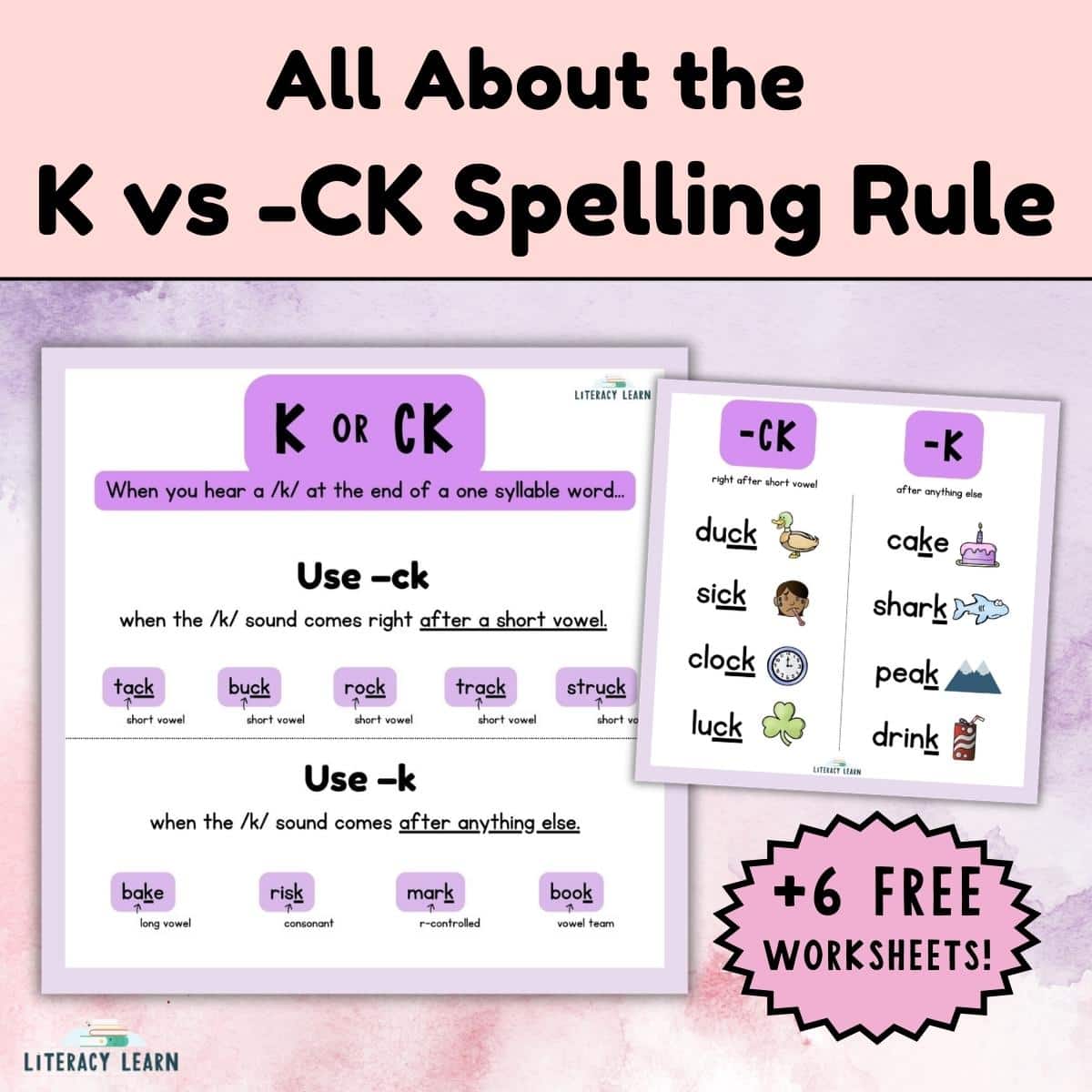
The 3 Spellings of the /k/ Sound
Students learn an important and surprising fact early in Kindergarten: both c and k make the /k/ sound, like cat and kite.
Even if they don’t realize it yet, this is often their first glimpse into an important truth about the English language: The same sound can be spelled in more than one way, and that can make spelling really tricky!
As kids move into first grade, they discover there’s yet another spelling for /k/: the digraph -ck.
So now the question becomes: How do we know which spelling to use? The answer is that spelling the /k/ sound depends on where you hear it.
Spelling Rules for /k/
This is where spelling rules come in. Rather than memorizing random patterns, students can learn that English is actually organized.
These rules help them notice predictable patterns, and the /k/ sound is a perfect example.
- At the beginning of a word: Students learn the C vs. K Rule (often called the Cat-Kite Rule), which explains when to use c or k to spell /k/.
- At the end of a word: students learn the K vs. -CK Rule (sometimes called the Long Spelling Rule), which explains how to spell /k/ at the end of a word. ⭐️ Keep reading to learn all about this!
K vs. -CK Spelling Rule
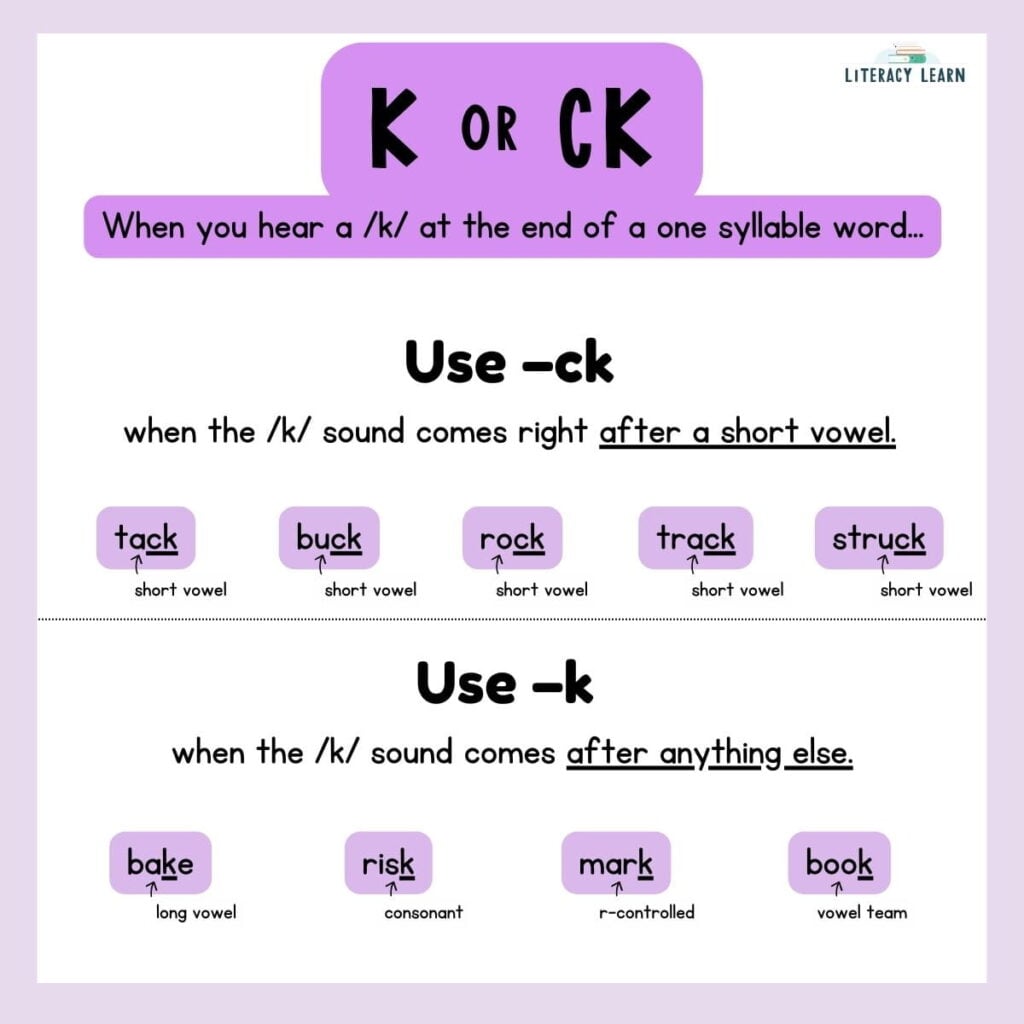
There are two common ways to spell the /k/ sound at the end of a one-syllable word in English.
- k
- -ck
How do we know which one to use?
Just pay attention to the sound that comes right BEFORE the /k/ sound! This sound will help you determine how to spell the /k/ sound accurately.
📝 Rule:
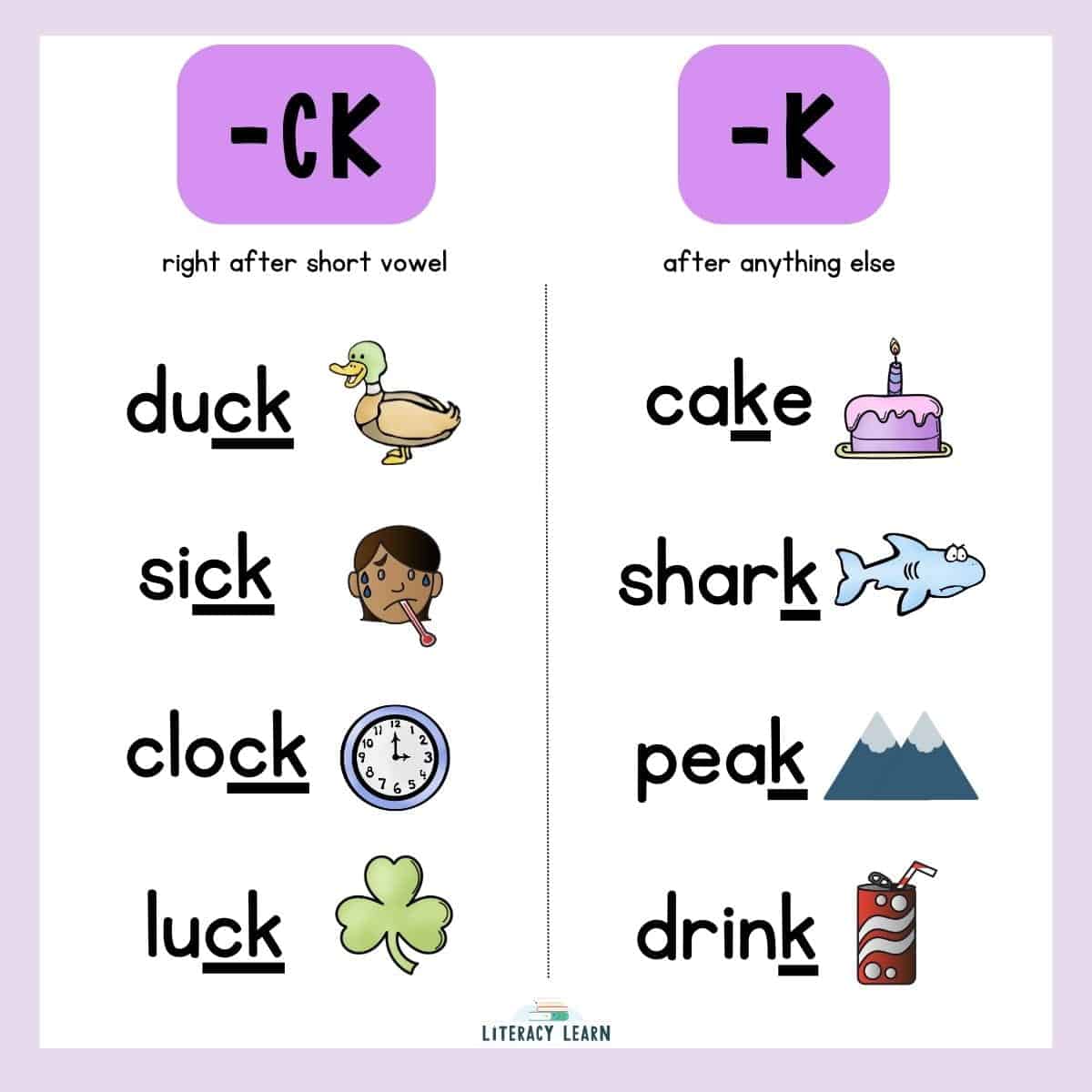
- Use -ck immediately after a short vowel sound.
- Use k after any other sound. This can be a consonant sound or any other vowel sound, like a long vowel or r-controlled vowel.
When to Use -CK
In a one-syllable word, use –ck immediately after a short vowel sound.
-ck Examples:
- tack
- rock
- duck
- stick
- track
- struck
⬆️ Notice how all of these words have a short vowel sound immediately before the /k/ sound. That’s why the /k/ is spelled with the digraph -ck.
When to Use K
In a one syllable word, use k after any other sound that is NOT a short vowel. This can be a consonant sound or any other vowel sound (e.g. long vowel, vowel team, or r-controlled vowel).
k Examples:
- bike
- shark
- peak
- book
- whisk
⬆️ Notice how all of these words have a consonant or another vowel sound (not short) right before the /k/ sound. That’s why the /k/ is spelled with the k.
📏 Long Spelling Rule
To help students remember this, you can use a simple jingle: “Long spelling right after short vowel.”
What does this mean? Well when you compare the graphemes, –ck has two letters while k only is one. This follows the “Long Spelling Rule.”
The digraph -ck is literally the longer way to spell the sound. That’s why this jingle makes sense, and it’s a fun way to make the ‘rule’ easier to remember! I usually have my students pound the jingle on their desk (they LOVE this!).
👉🏻 Read more about the long spelling rule and see how it also applies to other spelling choices: ge vs. -dge and ch vs -tch.
Teaching Tips
You can introduce the K vs. CK rule once students know short vowel sounds, the digraph -ck, and common ending blends. With that knowledge, they can practice spelling words like:
- k = elk, desk, bunk, ask
- -ck = stuck, rock, Jack, pink
Once students learn the VCe syllable type (Magic E words), this spelling generalization needs to be revisited.
In VCe (Silent E) words, the /k/ sound at the end will be spelled with the letter k, followed by the final silent e. Now they can practice spelling words like:
- back & bake
- lack & lake
- snack & snake
- lick & like
Note: In VCe words, the /k/ sound will never be spelled with the letter c.
That’s because the final silent e makes c say /s/, like in face, rice, and truce. Read more about Soft C to learn why.
Later on, as you introduce the Vowel Team Syllable and the R-Controlled Syllable Type, kids should be able to apply this knowledge to spelling words like:
- nook
- sneak
- mark
- stork
- cheek
- hawk
You should also teach that in many two-syllable words, the /k/ sound is usually spelled with the letter c (e.g. logic, picnic, classic, plastic).
Free Worksheets
Read our teaching tips and get 6 free worksheets for targeted and meaningful practice.
Our worksheets are designed for introducing this rule, so almost all the words and pictures are closed syllable words with short vowel sounds.
📑 Decoding Practice Worksheets
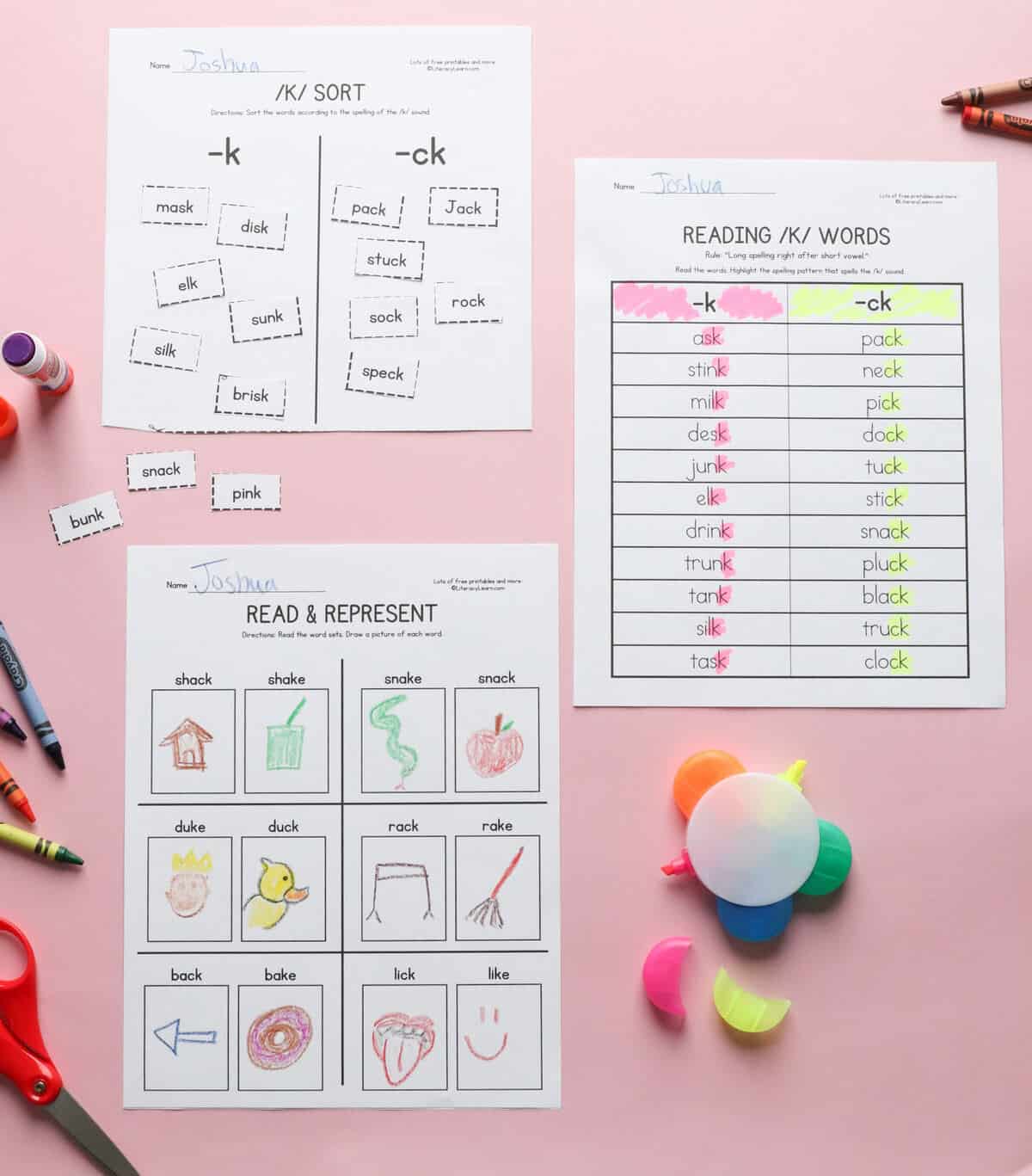
Decoding words that end in /k/ usually isn’t too tricky, so students probably won’t need to spend a lot of time reading them in isolation.
However, reading words with these patterns—and seeing the two spelling choices side by side—is very helpful for students so they internalize the spelling patterns in words.
You can use targeted word lists and word sorts for this.
📄 Get 3 Free Worksheets (download below!) focused on decoding words with the /k/ sound.
- Reading /k/ Words Worksheet: Kids will highlight the /k/ spellings in each word. They’ll then practice reading words with k and -ck.
- /k/ Sort Worksheet: Kids will read words. Then, they’ll cut out and sort the words into k and -ck columns.
- Read & Represent Worksheet: Kids will read word sets, then appropriately appropriate represent each word with a picture. It does include VCe words with long vowel sounds.
🔡 Encoding Practice Worksheets
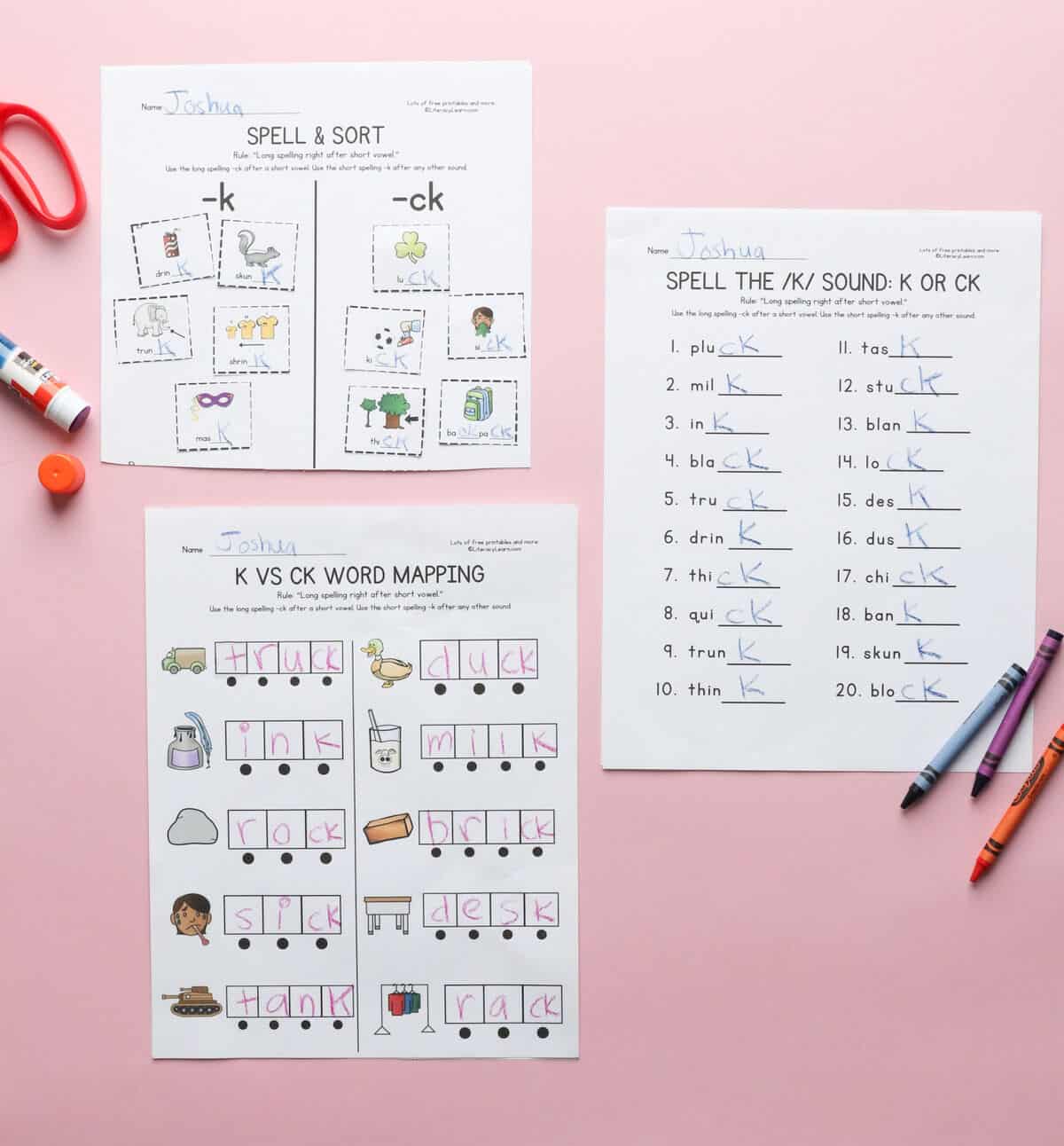
Because this is a spelling rule we’re talking about, encoding practice is essential. So once kids can read words with both k and -ck rather effortlessly, it’s time to teach the long spelling rule for spelling.
Be sure to provide direct, explicit instruction and lots of examples. Use our Google Slides Presentation for instruction! Then, kids should practice spelling with support and eventually independently.
📄 Get 3 Free Worksheets (download below!) for spelling words with the /k/ sound.
- Spell the /k/ Sound Worksheet: One-syllable words are included with the initial letters written out. Kids will complete the words by spelling with either a k or -ck, applying the rule.
- Spell & Sort Worksheet: Kids will look at pictures, apply the spelling rule, and then sort words according to k and -ck spellings.
- Word Mapping with Sound Boxes Worksheet: Following a true speech-to-print format, kids will look at pictures and spell the words using sound boxes.
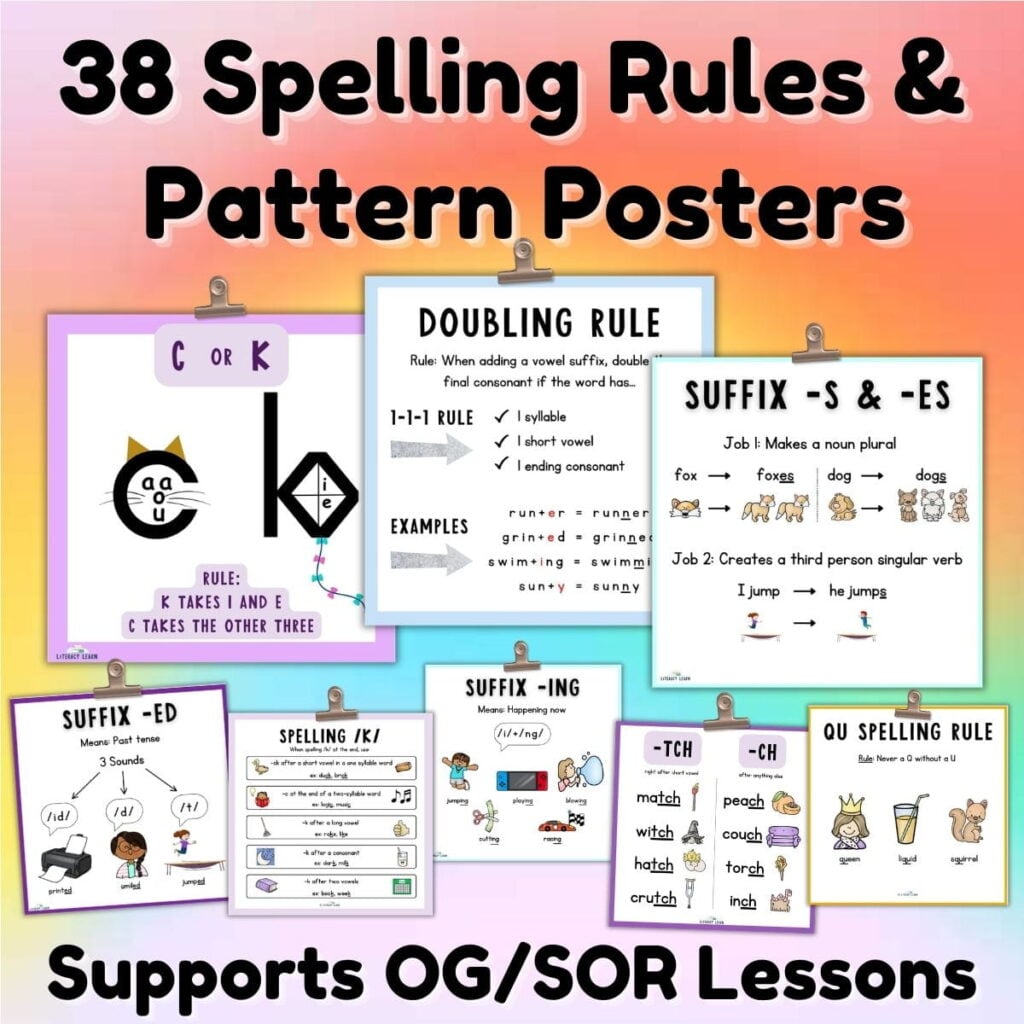
🖨 Download & Print
DOWNLOAD TERMS: All of our resources and printables are designed for personal use only in homes and classrooms. Each teacher must download his or her own copy. You may not: Save our files to a shared drive, reproduce our resources on the web, or make photocopies for anyone besides your own students. To share with others, please use the social share links provided or distribute the link to the blog post so others can download their own copies. Your support in this allows us to keep making free resources for everyone! Please see our Creative Credits page for information about the licensed clipart we use. If you have any questions or concerns regarding our terms, please email us. Thank you!

MORE Freebies: Consonant Blends Chart, Soft C & G Chart, Short Vowel Words.
♾️ Get Unlimited SOR Printables in the members-only library! ✨
The Reading k vs ck link isn’t working. Can you please forward those sheets to me at ppaioni@bridge-rayn.org.
Thanks in advance!
Patty
Hi Patty,
We’re happy to help you troubleshoot. I’ll send over an email now.
Katie