
Using Look-Alike Words for Phonics + Free Digraph Printables!
This post may contain affiliate links. As an Amazon affiliate, we earn from qualifying purchases.
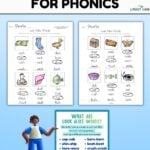
Learn why using look-alike words in phonics instruction is a powerful strategy that sets kids up for success. Plus, get two free printable digraph worksheets to use right away to help kids with words that look similar!
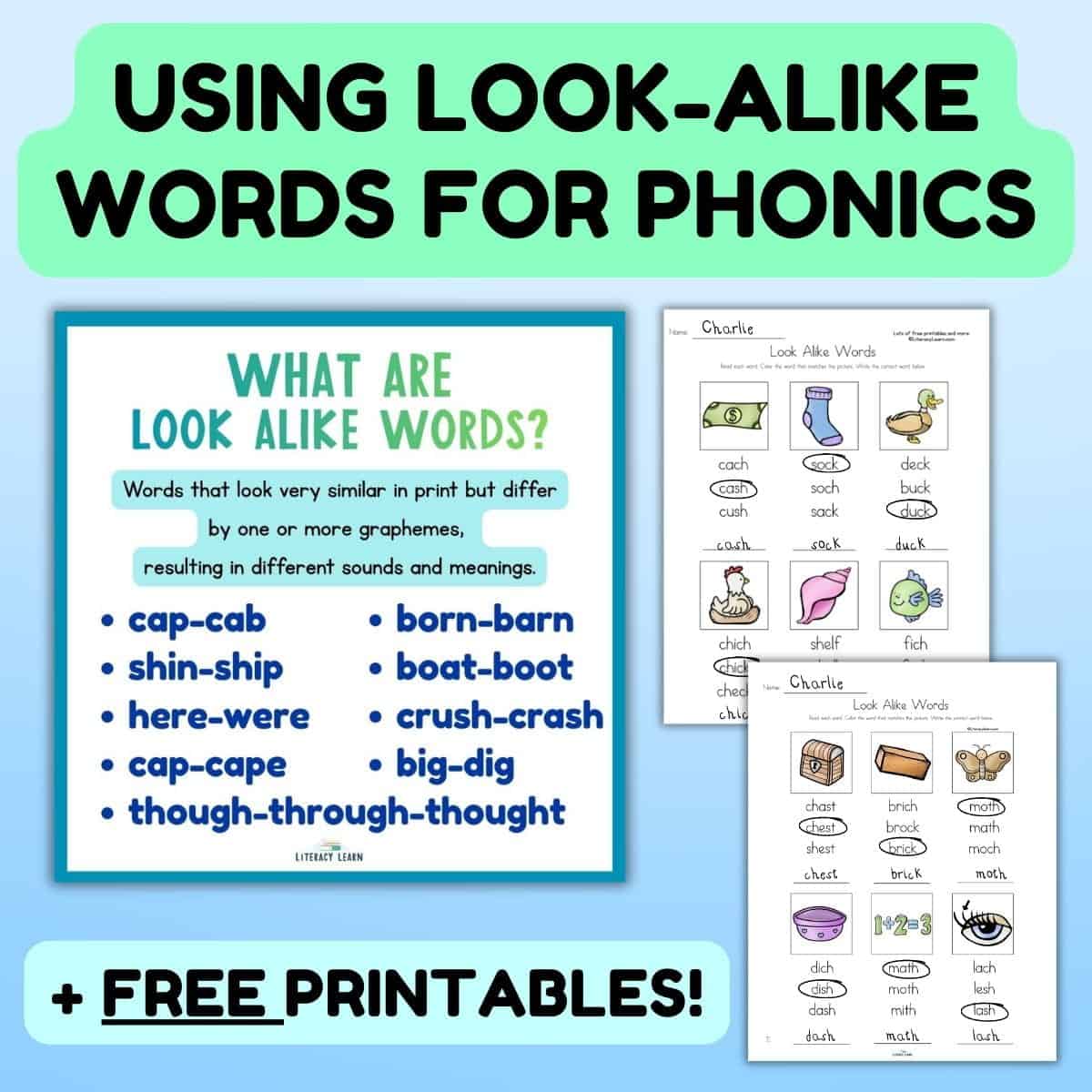
What Are Look-Alike Words?
Look-alike words are words that look very similar in print, but are not the same. Typically, there’s one small difference in spelling that changes the sound and meaning of the word.
For beginning readers, those minor differences can have a big impact on decoding accuracy and overall understanding.
There are hundreds of look-alike words in the English language. And because our spelling is precise, one small change in letters can completely change both the pronunciation and meaning of a word.
Just think of these common look-alike word examples:
➡️ was, saw
➡️ they, them, then
➡️ here, where, there
➡️ through, though, thought, though
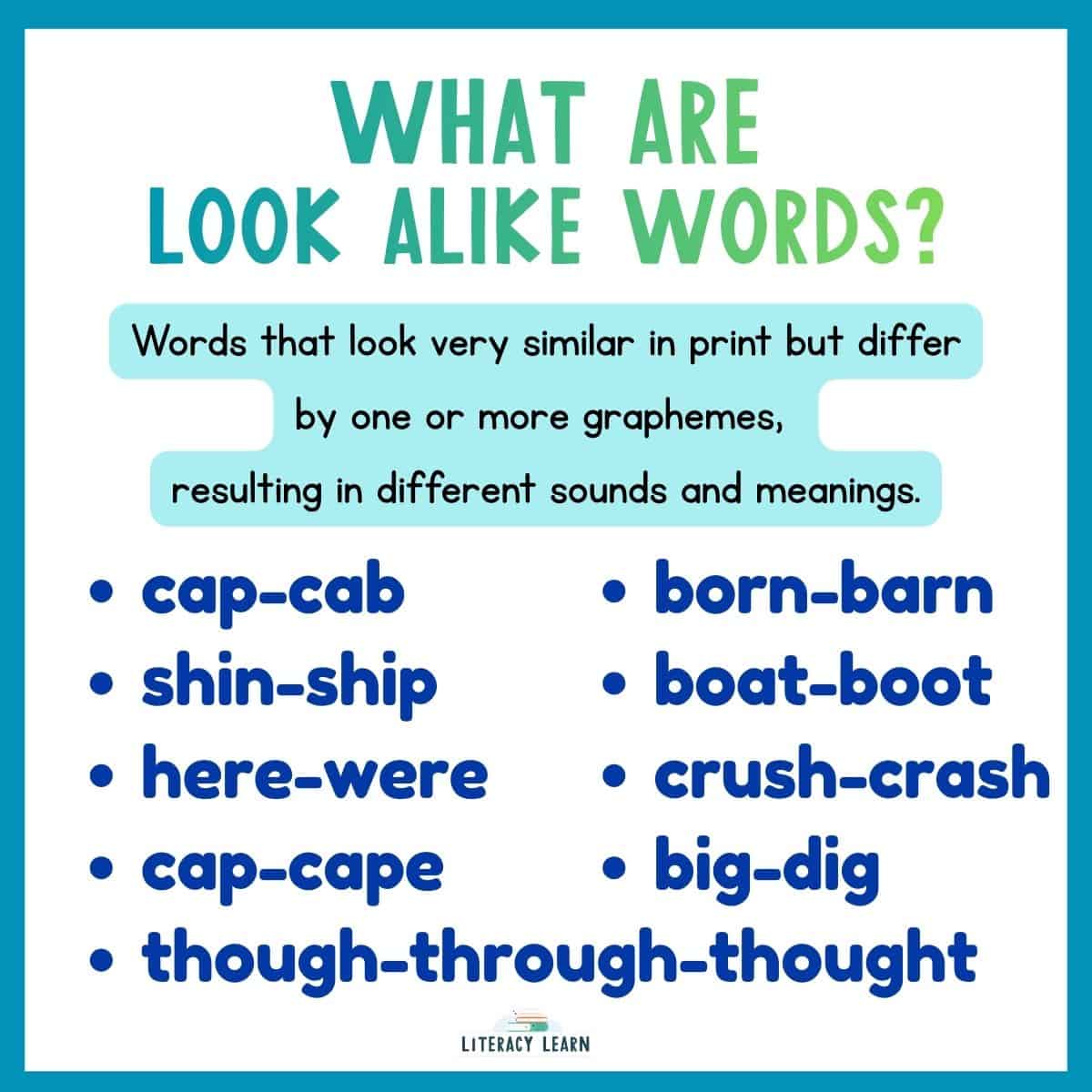
Here’s another example. If you think about these look-alike words: crush and crash, they differ by only one grapheme, a single vowel letter.
If I say, “I had a crash,” or “I had a crush,” the meanings of those sentences and the mental images they create are entirely different. You can see how that one vowel is really important!
Why Teaching with Look-Alike Words Is Important
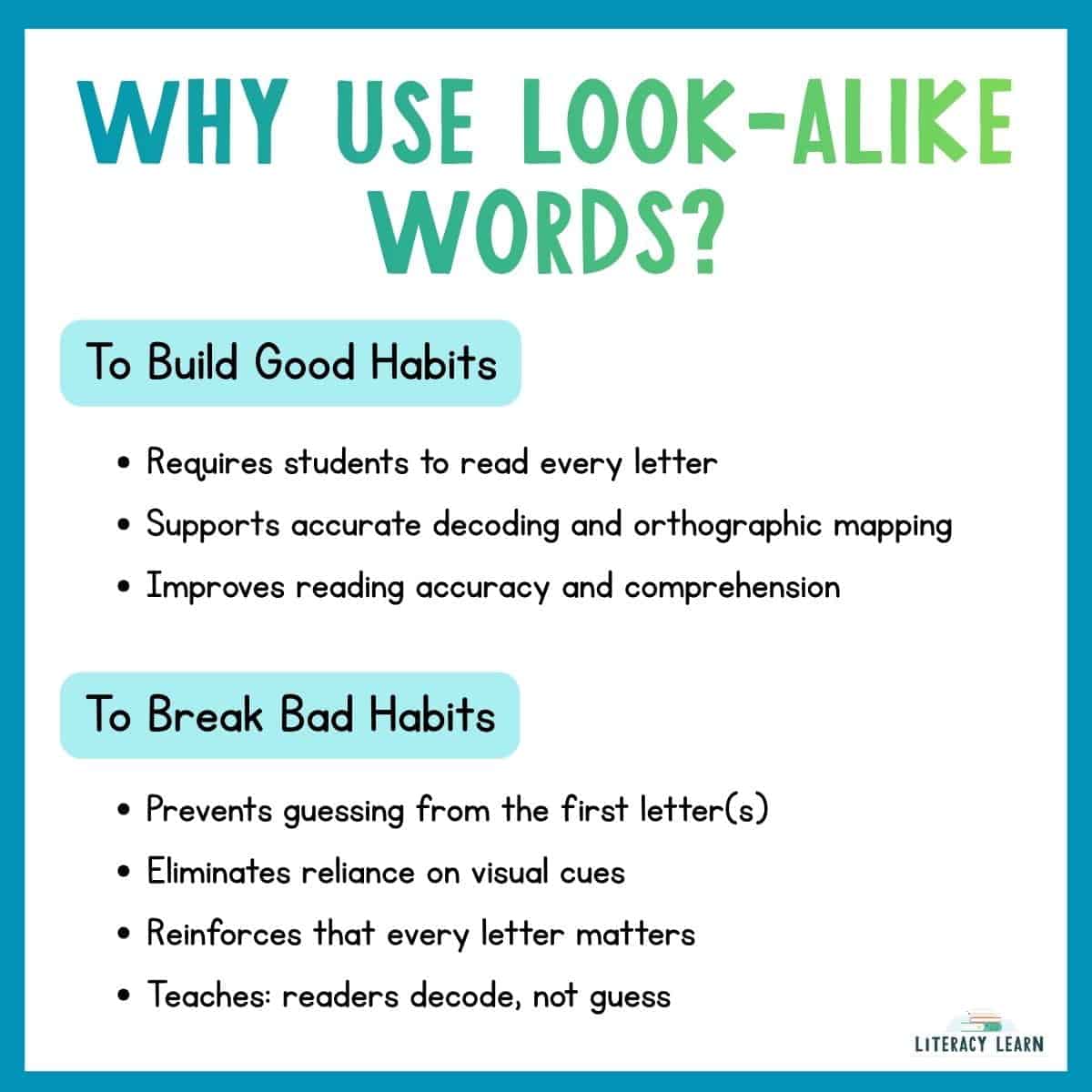
Using look-alike words in phonics instruction is helpful for two key reasons: they help build strong decoding habits and break ineffective guessing behaviors.
🌟It Builds Strong Decoding Habits
Look-alike words require children to scan carefully across the entire word, attending to every grapheme and matching it to its corresponding phoneme.
This practice encourages decoding accuracy and supports orthographic mapping, helping words become stored in the brain for future reading and spelling.
When kids decode words accurately, comprehension improves. Accurate reading is key to accurate understanding.
🌟It Breaks Bad Habits
Look-alike words are also a powerful strategy to help break students of the habit of looking at the first letter or two and guessing the word!
Strong readers cannot rely on partial visual cues of content, because so many words are similar in structure. Students must actually decode the words.
Using look-alike words teaches kids that every letter matters. This reinforces the idea that good readers don’t guess, they decode!
Teaching Tips for Look-Alike Words
Look-alike words can be used at every level of phonics instruction. Instruction should begin in kindergarten with simple CVC words and should continue as students progress through the skills in a Structured Literacy-aligned scope and sequence.
Use these teaching tips to build awareness of subtle differences between words in your classroom:
- Use Word Chains to help kids make connections between phonemes and graphemes while applying their knowledge of phonics skills to encoding.
- Use resources designed explicitly for look-alike words with pre-written word-sets.
- Include activities that promote orthographic mapping.
- Use word lists for reading & dictation.
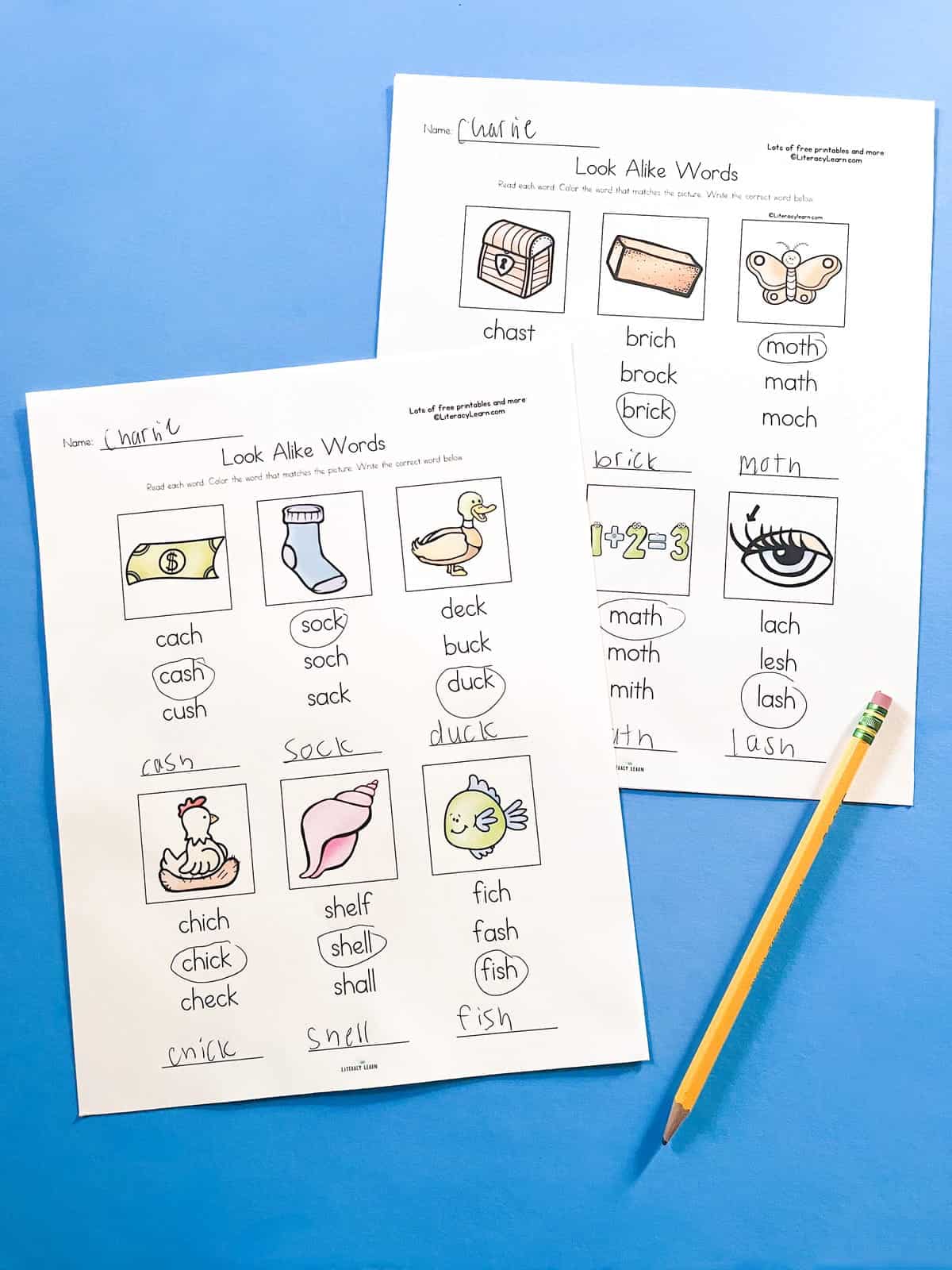
Free Printable Look-Alike Word Activity
To make it easy for you to get started using look-alike words, we’re giving you two free worksheets to use right away with students. 🥰 Download them below!
Kids will practice decoding and encoding while they are orthographically mapping words.
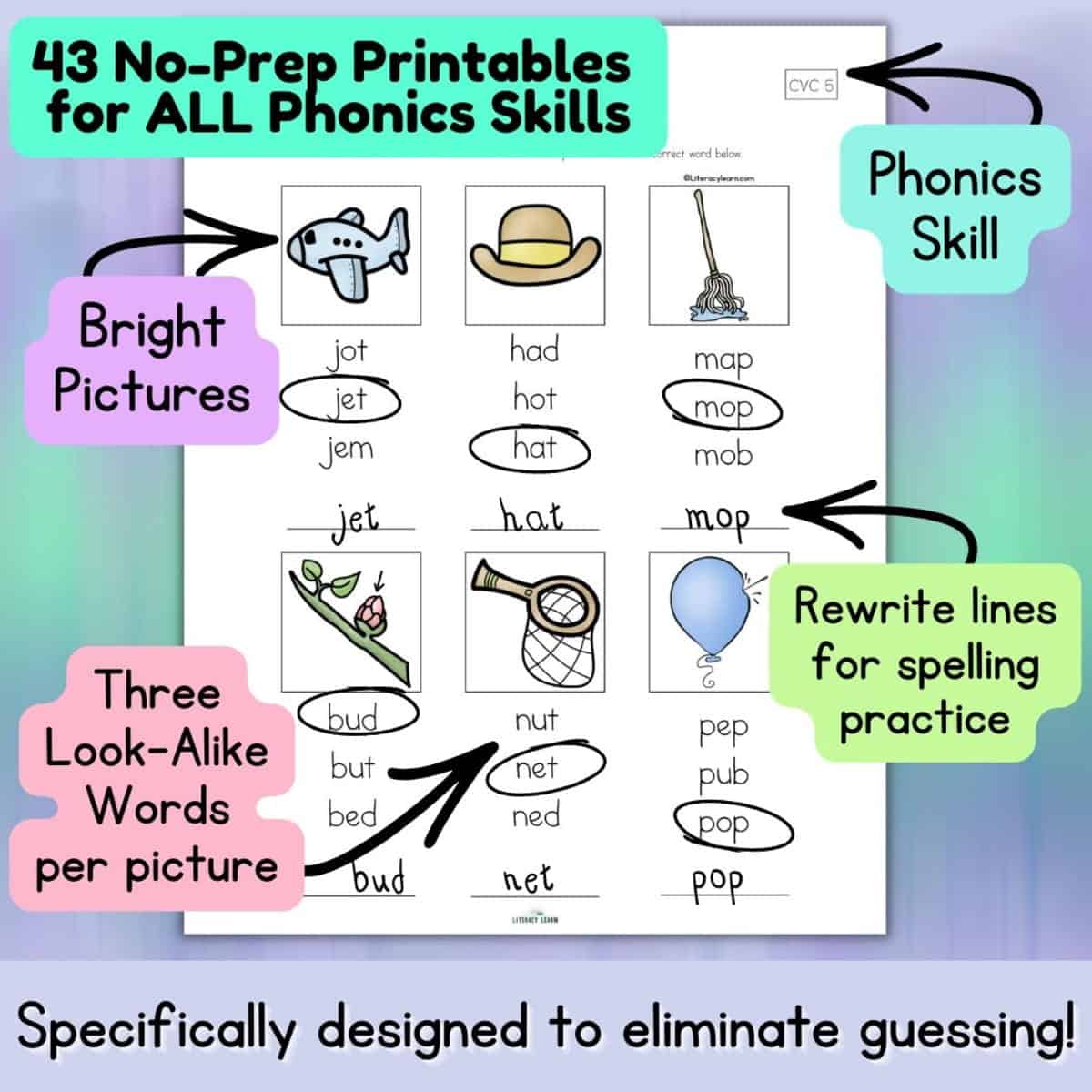
These two worksheets focus on digraphs. Kids will see a picture and three look-alike word options. They’ll carefully read each word, identify the correct spelling, and then rewrite the word.
UPGRADE AVAILABLE: ⭐️ Get the premium resource with 43 NO-PREP pages!
Related Resources
Download & Print
DOWNLOAD TERMS: All of our resources and printables are designed for personal use only in homes and classrooms. Each teacher must download his or her own copy. You may not: Save our files to a shared drive, reproduce our resources on the web, or make photocopies for anyone besides your own students. To share with others, please use the social share links provided or distribute the link to the blog post so others can download their own copies. Your support in this allows us to keep making free resources for everyone! Please see our Creative Credits page for information about the licensed clipart we use. If you have any questions or concerns regarding our terms, please email us. Thank you!

MORE Freebies: Shades of Meaning Chart, CVC Word Ladders, Printable Phonics Word Lists.
♾️ Get Unlimited SOR Printables in the members-only library!